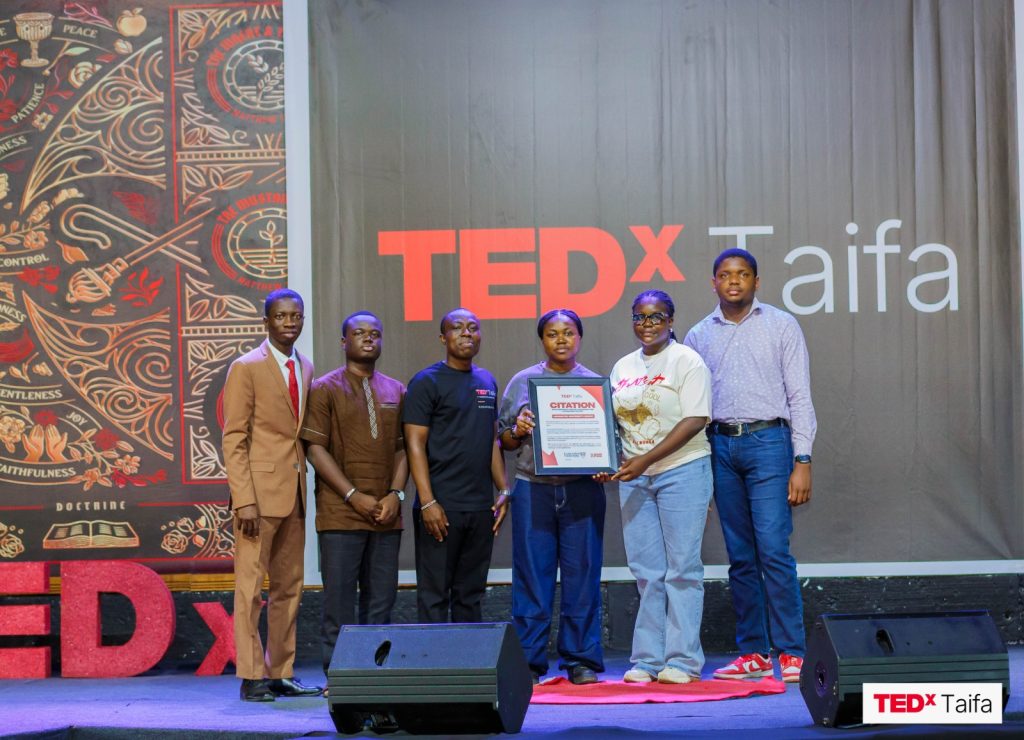
Through its participation at TEDxTaifa 2026, Lancaster University Ghana highlighted the role of higher education in preparing young people to shape the future, with Computer Science lecturer Emmanuel Baah challenging audiences to rethink how knowledge, technology and innovation can drive Africa’s development.
Held under the theme “Resurgence,” the event brought together voices from different fields to inspire young people to recognise their potential, take responsibility for their futures and turn ideas into meaningful action.
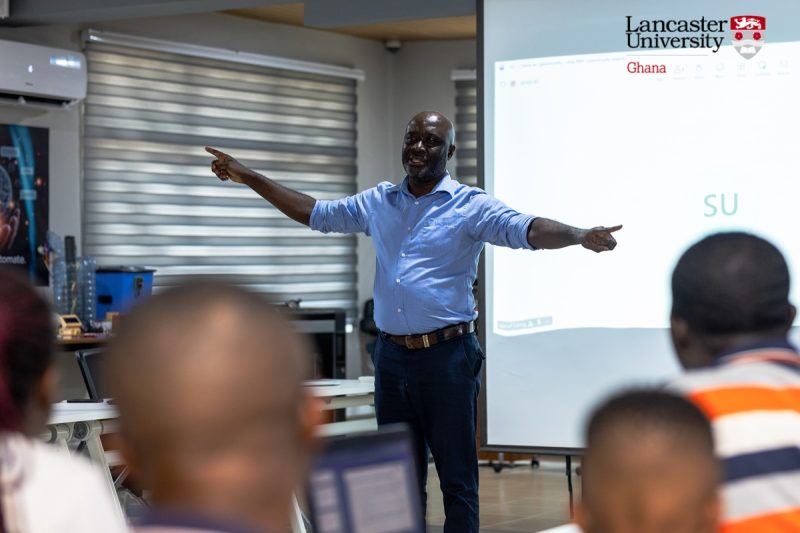
Representing the university, Emmanuel Baah of the Computer Science Department spoke on “The Knowledge We Need for the Future,” exploring how Ghana and Africa can better prepare young people to contribute to a world increasingly shaped by artificial intelligence, automation and technological advancement. In his presentation, Mr Baah challenged conventional approaches to education, arguing that the ability to memorise information is no longer enough to prepare young people for the future. As technology makes information increasingly accessible, he emphasised the need to develop people who can question existing systems, create new solutions, adapt to change and collaborate to solve complex problems.
Drawing on examples of young innovators working in artificial intelligence and technology, he asked why similar breakthroughs could not emerge from Ghana and across Africa. He highlighted the need for greater African participation in technological development, alongside the research infrastructure and learning environments that enable young people to turn ideas into practical innovations.
He also raised concerns about the limited resources available to African researchers, particularly access to the computing infrastructure required for advanced research. Without the necessary investment in skills, resources and opportunities, he warned, Africa risks relying on technologies developed elsewhere rather than building solutions to meet its own needs.
Mr Baah connected these ideas to the role universities must play in preparing students for the future. Beyond imparting academic knowledge, universities must create opportunities for students to undertake research, experiment with ideas, learn from failure and develop solutions to real-world problems.
At Lancaster University Ghana, undergraduate research and practical engagement with emerging technologies provide opportunities for students to explore these possibilities. During his presentation, Mr Baah highlighted the work of Nhyira, a student, who is developing smart, sustainable e-waste management solutions, and Nana Kwame, whose interest in innovation was strengthened after presenting his research at Anglia Ruskin University in Cambridge. He also referenced the Emerging Technologies Centre (ETC) Bootcamps, supported by KGL and Stanbic Bank, where high school students explored technology and developed their creativity through practical activities.These examples illustrated his argument that young innovators need more than ideas. They need mentorship, opportunities to experiment, access to relevant tools and environments that encourage them to question existing approaches and develop their own solutions.

Lancaster University Ghana’s participation at TEDxTaifa 2026 reflects the importance of bringing academic knowledge into wider conversations about the future of society. As artificial intelligence and other emerging technologies reshape industries and the skills required to succeed, universities have an important role in preparing young people not only to adapt to change but also to influence it.
Through the expertise of our lecturers, the research interests of our students and initiatives such as the Emerging Technologies Centre, we continue to contribute to conversations about how education can empower the next generation to think critically, innovate and solve meaningful problems.Mr Baah’s presentation reinforced the need to prepare young people not simply to fit into the world as it exists today, but to help build the world they want to see.
For Lancaster University Ghana, the future of education lies not only in what students learn, but also in what they can do with that knowledge to create opportunities, advance innovation and make a meaningful contribution to Ghana, Africa and the wider world.